RSS Feed    


Welcome to the website of Mani Feniger

Mani Feniger is an author, teacher and clinical hypnotherapist living in the San Francisco Bay Area. Her popular and practical book, Journey from Anxiety to Freedom, follows the lives of eight people (including the author) who struggled with anxiety and found a path to reclaim their lives. Their honest and courageous stories will give you the motivation and tools to move forward on your own journey.


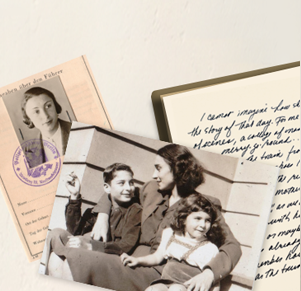
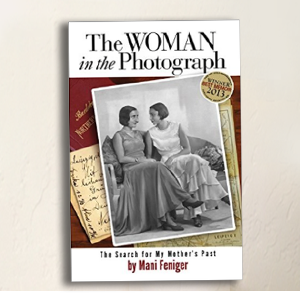
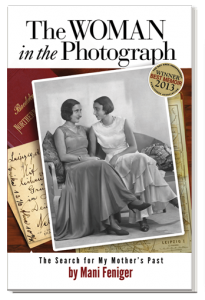
Mani Feniger’s upcoming book, The Woman in the Photograph, is a compelling narrative set in motion by an unexpected meeting with history. With the fall of the Berlin Wall, the door to her mother’s vanished past sprang open and what she discovered irrevocably changed her life. Her surprising, beautifully written memoir reads like a detective story. It will stir your curiosity and make you wonder about the man or woman in your own photographs and how your life has been influenced by events you know little about.


“Mani’s evocative book unfold like a mystery. The story has a heartbeat as she uncovers the power of secrets. I found myself rooting for her and her mother.” – Sue Bender, author of “Plain and Simple” and “Everyday Sacred.”

THE WOMAN IN THE PHOTOGRAPH will be available for purchase on this website and on Amazon in June 2012.


The Blog:

Legacy, Memory and Memoir

An exploration of the mysterious weaving of past and present, personal and historical and some related books, stories and resources.

I want to follow up on last week’s post about how people, in this case my mother, chose to share some parts of her life with me, but not others. Because a mother has so much influence on how we see ourselves and the world, I think we are entitled to know more about her life, then perhaps we need to know about the lives of other people.

If you are visiting with a friend, you might choose to share some very personal emotional experiences. If you are at a business conference, you might enjoy someone’s company very much, but still choose to converse about topics that you have a common reference to, and most likely you would refrain from giving “too much information.”

Writing a memoir falls somewhere in between the two examples. As the author, I needed to let the reader see much more of my mother’s private life than I would normally tell other people, even family members. I also had to reveal much more of my own inner life than I would normally share. Sometimes I had to dig deep and even verbalize inner experiences that I might otherwise not have looked at, or put into words.

As a memoir writer, I had to give you everything. Please forgive me for quoting the judges on American Idol (you see I have diverse interests), but they often tell contestants that as artists, they need to “leave it all on the stage.” Writing a book is the same way, at least a personal and authentic book like a memoir. I didn’t want to talk about my life when my mother remarried, I didn’t want to talk about some of my own insecurities and my anger. But good coaches pushed me to write about the very things I didn’t want to write about, because you, the reader, needed to see what was behind my actions, what my inner conflicts were, and why this journey was such a breakthrough.

And then, after sitting at my computer month after month, sometimes sobbing, sometimes laughing, sometimes feeling anxious, I had to let go of alot of what I wrote, because a book written for others is not the same as a keeping a journal, though they may go together. When my stream of consciousness carried me to what it was like to get up in the early morning in Eastport, Maine, and walk along the heath while vapors rose off Passamaquoddy Bay and the birds in Princess Cove began to sing their wake up songs, I let myself write. Later I had to look at the arc of the story, the intention of the narrative, and delete some of my “darlings.” That’s what one of  my editors told me. “You have to let go of your darlings and really focus on the intent of the story.”

Writing is such a wonderful form of expression–creative, satisfying, challenging, fulfilling, and there is also a great deal of craft, discipline and surrender that is needed for the marriage of memoir and art.

What have you noticed when you write? Tell us about your experiences.


“The Woman” coming soon

I apologize for the gap in my blogging. For the last three months I have been deep in the process of producing my book, part memoir, part biography, called “The Woman in the Photograph.” I am so excited to announce that it will be in print by Mother’s Day, and up on Amazon soon after. So let me talk about mothers.

We all have, or have  had a mother. And because this is often the human being who has a major influence on our lives, hopefully along with a father, we cannot really see this figure as a whole human being. The paradigm of mother means that we looked to her when we were helpless and completely dependent. It also means we pushed her away so we could find a sense of ourselves. We are indebted to her. We blame her. We idolize her. We demonize her. And no matter how rational we try to sound when we say we have some detachment, and we take her as she is, the truth is that this figure has left a deep imprint on our psyche, and we suffer more if she doesn’t see who we are, if she doesn’t value us, if she is in pain or if she criticizes us.

Okay, I have taken some liberties in these broad generalities. Maybe they are all part of how I see my mother. But look at all the people to write about their relationships with their mothers–most recently Diane Keaton in her newish book, “Then Again.” I’m looking forward to reading it.

I too have written a book about my mother, or more precisely, the search for my mother’s past. Why would I spend twenty years looking for her past? you might wonder. First of all, I loved her very much. She was also a quirky, eccentric, brave, annoying, vulnerable, stubborn person, and I thought I knew her better than anyone else in the world. But I didn’t.

I knew how hard her life was after my father died; I knew that she rode the New York subway in the rush hour to go to work at an import company owned by a German Jewish immigrant who wanted to help her, back in 1953. I knew that she spoke German, French, and English with just a slight accent, enough so people were sometimes not quite sure where she came from.

I didn’t know of the glamourous, extravagant life she lived in her youth, or the opportunities she had in Leipzig, Germany before the rise of Hitler. I didn’t know how much fun she had, what wonderful romances, what elegant clothes she wore, or that she was on the maiden voyage of the SS Bremen. Why would that matter?

It does. Because whether in words, or in those unspoken secrets that family members pass along between the lines of their speaking, her message was that life was hardship and survival, and there was little room for play or lightness. And that was only half the truth. Oddly enough, one of the most important outcomes of my twenty year adventure was to reclaim my rightful legacy–the right to be happy, to trust life, to feel safe.

Do you ever think about what your mother told you about life? Probably. How about reflecting on all the things in her experience she didn’t talk about. Are you interested?

There are many levels to “The Woman in the Photograph.” I can’t wait to share it with you soon.

Shared Memory

Last week I heard a wonderful conversation with Nicole Krauss, facilitated by one of our Bay Area novelists, Elizabeth Rosner. The occasion was the publishing of Krauss’s third novel, “Great House,” but started with the subject of her first book, “A Man Walks Into a Room.” The conversation centered around the issue of memory, one of my favorite topics, obviously, and in particular shared memory.

As a hypnotherapist I understand the plasticity of our brains, that are constantly reweaving synapses as new information becomes available. Have you ever completely forgotten an event, then an association or someone else’s memory of it stimulates a train of of thoughts that you hadn’t had in decades. This just happened to me. I washed a silk scarf and took it outside to hang on my little makeshift wash line. I was thinking I didn’t want to have to iron it, and suddenly I saw an image of my mother washing out the sheer gauze curtains that hung in our living room and then pressing them against the window pane while wet so they would dry smooth and not need ironing. I don’t think I had ever had this memory before.

But what if someone tells you about an event in which you participated and you don’t remember it. A friend from the period I lived in Eastport, Maine wrote a story about the time we filled her van with hay and went on a modern day hay ride under the full moon. Blank. No memory at all. Was I really there? She is sure I was. But then in the subsequent days I started to imagine how that might have been. I could picture myself in my twenties. I knew what the heath along the ocean would have looked like in the glow of the harvest moon. Even a story started to to emerge. If I had written the story, I think my subconscious would have gotten more and more used to it. It might have eventually become my memory, triggered by her shared memory.

A shared memory also means we have a witness to our experience. This can make it more real, and more lasting. Two years ago I went to Spain to walk part of the Camino de Santiago pilgrimage route as a member of a documentary film crew. So many odd, difficult, hilarious, poignant things happened. “Remember the night in St. Jean Pied du Port when we went for a walk and when we came back we were locked out of the albergue?” I can say to my friend Theresa. I don’t need to say any more about how we got anxious, and then started laughing, and had to literally sit down on the cobble stones because we were laughing so hard, we couldn’t stand up – two Americans in the middle of the night in a little town on the edge of the Pyranees, locked out. This is a shared memory. She makes it seem more real because she witnessed it.

When the day comes when we forget important moments, how sweet it would be to be reminded by having shared memories. Even if we don’t absolutely know we were there or did this, we can call upon our imagination to fill in the flavors and textures that remain in our hearts even when names and details fade.

Doing things together with people you care about is satisfying and fun. It also enriches our experiences to have shared memories, a place where separation falls away, and another person’s memory is intertwined with your own, though each might see it a little differently. Memory is a not a fact; it is a fluid, flexible living quality of mind. Enjoy its offerings.

Not enough or too much

In my soon-to-be-released memoir, “The Woman in the Photograph,” I lament that my mother didn’t tell me enough about her past to help me comprehend what happened to her, and how it might have affected me.

Now, after twenty years of searching for my mother’s vanished past, I do know what happened to her and have at least a sense of what she had to face, and what she left behind, when she left Leipzig in the 1930s to escape the persecution of the Nazi regime. I also can see that the woman in the photograph, from which my book takes its name, had once truly expected that she would chart a life full of possibilities, opportunities, glamour and love. I believe that she must have trusted life, and perhaps this trust was the biggest casualty of her experience. She recreated some of the material things she lost, but the scar of losing faith in existence left its shadow on her perspective.

Other people say their mothers told them too much. Such an irony. When we are children, we don’t want to know about our parent’s disappointments, about their problems, or their past traumas. We want our mothers and fathers to paint an encouraging world for our impressionable eyes. We need to be assured that we are safe and life is good. Many children, especially children of alcoholic parents, or of parents who have many unresolved issues of their own, feel like they knew way more than they wanted to know about their parents’ problems.

Yet as adults, understanding their problems helps us sort out our own needs from theirs. Now I hang on every word from someone who knew my  mother, study every photograph, and even traveled to Germany, the country of her birth, to walk in her footsteps. I was compelled to pursue this exploration, not only to better understand the forces that shaped me, but because I loved my mother and thought she was a fascinating person, someone I wanted to know not just as my mother.

There are many books that explore the mother-daughter relationship. A couple I have enjoyed are “Not Becoming My Mother” by Ruth Reichl, and “Traveling with Pomegranates” by Sue Monk Kidd and Ann Monk Taylor. Have you read any good reads about adult relationships to mothers or fathers? Let me know your experiences.


This week, I have invited one of our regular blog readers to share a mini-memoir. Here are Richard’s reflections on his relationship with his father:

One of the fortunate things about getting older is that it affords one the opportunity for more experiences in life. What we sometimes call ‘maturity,’ allows you to modify your perspective on significant relationships.

My memories of my Dad from my teen years were dominated by fear and/or anger. He had been a controlling, domineering, critical, and at times harsh parent during my childhood. On a few occasions when he lost his temper, he behaved in ways people would now call ‘abusive.’  Rather than being rebellious like my older brother, I adapted by becoming a generally ‘well behaved’ child. Being almost ‘invisible’ at home meant that I at least felt safe. Of course, it also meant that I rarely, if ever, felt loved by him. I didn’t develop the self-confidence that a young adult needs to make his way out into the world with relative ease.

As a young married man in my mid 20’s I was grateful for the support and encouragement my father had given me in my efforts to become a conscientious objector to the Vietnam War. Then I was even more appreciative of the open arms with which he welcomed my wife into our life as a family.  Since my wife is from a different race and culture, this meant my Dad had to be flexible about his very strong identification with his Jewish heritage. Furthermore, he insisted that his parents, Eastern European immigrants who were even more rigidly identified with their background, ‘give her a chance’ before deciding whether they would accept her or not.  His support and her inherent genuineness and lovability meant that she soon won their acceptance and affection.

As a young father in my late 20’s and early 30’s I marveled at the adoration, playfulness, and pure joy with which he moved into his role as ‘Papa’ with our daughter. Once the responsibilities of the raising of a child were gone, he could relax and simply enjoy being with her.  Encouraging her to learn and to solve problems as they arose in life, he enhanced her self esteem. For that both my daugher and we as her parents, have been eternally grateful.  He still treated my mother badly at times and teased me too much now and then. And by my later 30’s, with my own burgeoning sense of self-confidence and with my wife showing me the way, I began ‘to give it back to him as good as I got it.’  Although I still shared very little of my inner life with him, at least I had discovered that he was not ‘as scary’ as I had always thought.

Time afforded me the opportunity to gain new perspectives on my Dad and to make changes in my relationship with him.  Now as a grandparent myself I find myself using him and my Mom as examples of how to play that role successfully. What satisfaction that has brought me!!

He was far from a ‘perfect father’– if there is any such thing. In fact, he left me with some challenging issues I had to work through over the course of my life. But I was able to forgive him for that, and to feel much appreciation for all that he did give me. In some important ways it was a lasting legacy for which I am very grateful.

How have you been able to gain more perspective on your parent(s) as you have gone through life? We welcome guest post or comments of about 500 words (or less) that reflect on the theme of legacy, memory and memoir.


We often think of intuition as some mysterious wisdom that arises inside ourselves, though we can’t say exactly where it is located. Does it live in your mind, or does it arise in your heart? Many people would say it’s a gut feeling as well and I go for all three. But I’ve noticed that intuition is not just inside ourselves. So often an external event will trigger that creative aha moment when something that has been confusing becomes clear or something calls your attention in a new direction.

For example, I had been torturing myself over the subtitle of my book. In the process, I asked all my friends, took polls on Facebook, opened the Thesaurus to find other words for search, quest, mystery, etc. Then a friend suggested Making Peace with a Forgotten Past. I didn’t  use that exact wording, but all week I was struggling with the theme of the Afterword, and when I saw her email, I knew that was it. Suddenly all my random, chaotic thoughts fell into place around the theme of “making peace” and I knew how to finish the very last segment of the manuscript. Her comment focused my intuition.

Carl Jung said that what is unconscious often comes to us from outside, as if by chance. Taking some liberty with interpreting his words, you are walking down the street and you see someone who looks just like your old friend and you suddenly realize that it’s been way too long and you run home and call her. Or you are trying to make a decision about a trip to New York, and you pass a store window with a photo of the statue of liberty and you know it’s the right time. These are silly examples, but these outside cues really happen all the time, if you choose to notice them.

For me the great miracle of intuition is that your thoughts can be all jumbled, then it’s as though a breeze blows through and clears the air, and what was so chaotic becomes clear, becomes obvious. The whole process of writing my book has been like that. I wondered how I would ever make sense out of so many disparate details that occupied different periods of time and didn’t always follow a logical sequence. But I had to be willing to stay with my own doubt and confusion and not give up. I had to trust that intuition would be my companion and I had the willingness to go over the chapters again and again, and again, and listen to the feedback of critics, and trust my head-heart-gut sense to prevail in the end.

Intuition comes when you pay attention to your external and internal experience. Breathing in, breathing out, what do you notice? How does life speak to you – through images, sounds, the words of a friend, a song on the radio (that’s often a good one)? Tell us how you count on your intuition.

I imagine that you’ve heard something on the news or read an article on Indie Publishing, a form of self-publishing. Since I am choosing that path for my memoir detective story “The Woman in the Photograph: The Search for My Mother’s Hidden Past,” I am very excited about this modality. For me it is an opportunity to produce a book of professional quality equal to what the big publishers produce – and learn more about becoming a publisher than I ever wanted to know before.

Initially all my attention went into the search for my mother’s hidden past. Then came the decade of research and writing… and rewriting…and rewriting, with the help of developmental editors, copy editors and infinitely patient friends who let me read the same first paragraph aloud on the  phone, over and over, with just a little change. Do you like forgotten? or buried? how about my mother’s obfuscated past? I asked. But they were kind, and always eager to hear the next version when it was ready.

But now the writing is done and I want to produce this fabulous story overnight. I thought of the publishing part as something I could rush through, get over with so I could get on the book tour (whether virtual or in person). Then I started reading some of the incredible blogs about Indie Publishing that are written by experts who already were at the top of their game in traditional publishing decades ago.

Now becoming an independent publisher, whether for one book, or more, is becoming a passion in itself. There is so much to learn, and so many ways to make it happen, and a lot of choice about how much you want to spend, based on what you want to do with your published work.

Here’s the thing. I’m an author and a teacher and I want my memoir to get broad distribution. But my neighbor also has a unique and worthwhile story to tell. He was a paratrooper in World War II and survived the Battle of the Bulge. A niece interviewed him and recorded his tale of heroism and fear. They too have a book to share with relatives and friends. It may only be 50 pages, and they don’t need to advertise. There are sites like Lulu.com where they can produce a book pretty inexpensively, probably cheaper than a xerox spiral bound version, and make it a gift or let friends buy it directly. Sure, they need a bright high school student to upload it, but there are many people born and raised on computer technology.

Every life has events, and the inner story behind the events. Both are interesting and often revelatory. If you are fascinated by all the things happening in the world of independent publishing, and might have a yearning yourself to produce something people can read on their digital reading device or hold in their hands, here’s a great site full of advice, information, and links to other sites TheBookDesigner. You can look at the list of past articles if you are looking for something in particular.

This is the publishing revolution. We all have experiences that have been pivotal in our lives. We all have a voice that needs to be heard. Consider whether independent publishing might just be calling to you. You have a story to tell.

Memoir vs. Biography

This week was the two year anniversary of the devastating earthquake that hit Haiti on January 12, 2010. The news tell us that generous help was offered from all over the world, yet so much is needed and the Haitian people still live by and large in extremely primitive, and often unhealthy conditions.

As a memoir writer myself, I always appreciate when someone can tell a poignant story but make it so personal and accessible, that I can both enjoy it and be uplifted rather than discouraged. In this vein, I recommend to you On That Day Everybody Ate, an inspiring memoir written by Margaret Trost.

A memoir is not the same as a biography. A biography usually covers a person’s whole life, while a memoir writer often chooses to focus on a specific part of his or her life, to bring attention to a significant or pivotal experience. Yet for the reader to feel connected, the writer has to bring in enough history so you know and feel sympathetic to her/his point of view.

This is not easy. I have struggled and rewritten my manuscript many times because of this issue. In order for you to care about my search for my mother’s buried past, you have to know something about my past, yet not too much. I hope I have done as good a job as Margaret Trost. She is sympathetic, vulnerable and courageous – and she is feeding families and children who would be going hungry without her intervention.

As you read her book, you see she is not a superheroine. That’s the best part. She opens the door for us to know each small effort makes a difference. It’s a fast and fascinating read, and if you want to find out more about the organization she founded, The What If Foundation, just click here.

Acceptance

Dear Friends,

Happy New Year. I hope this year  brings you many blessings and opportunities. I apologize for my absence this last month and thank those of you who were concerned about why my blog posts disappeared. Even without many holiday plans, the stimulation of the last month just took over and I couldn’t focus. But I’m back and very excited about each new day.

This is the year my memoir “The Woman in the Photograph: The Search for My Mother’s Past” will come out. I am going to join the legions of creative, inspired, innovative authors who are taking the Indie Publishing route, and bring the book right to you without the publishing gate keepers. I hope you will participate in its journey because, more than ever before, it is the word of mouth and social media that are the links for communication. It takes a village and the whole globe. I will keep you posted in the months ahead and maybe you’ll realize you want to take that route too.

But for today, I wanted to talk about acceptance. We can find so many things that disturb us, that seem unfair and that we wish were different. But if we start giving life a report card, rating each event as satisfactory or unsatisfactory, we are creating a separation between ourselves and the movement of life’s energy.

Often things don’t fit my preferences. Sometimes what life brings is terribly painful. Throughout my life, our family has experienced loss, illness, disappointment, just as most families have. Acceptance doesn’t suggest that we ignore our feelings or that we become passive and don’t take appropriate action. Acceptance includes the grief, the anger, the heartache. It also includes the happiness at good fortune, the unexpected kindness that brings you joy, the possibility that you may have more than your neighbor yet you are willing to accept your blessings with gratitude and not hold back your joy out of guilt. (I expect to get some feedback on this one.) Perhaps you will find your own ways to contribute to your community from the wellbeing you are experiencing.

Acceptance is a way to fully participate in life. Otherwise whatever occurs gets positioned as your enemy, or at least the enemy of your ego. That’s where suffering becomes the greatest. When we say, “this should not have happened,” what do we mean. We believe that life has made a mistake. But how can we trust life if we decide that life was right yesterday but wrong today? We begin to build walls and our hearts close down. Let this be a year of heart opening, to yourself and others.

I recommend to you a lovely book by spiritual teacher Byron Katie. It is called, “Loving What Is.” Honestly, I can’t always get behind the loving part. But I don’t think this is meant to be an invitation to manipulate your own feelings. Her book gives some good pointers on accepting what is, and finding within yourself the power and wisdom to move forward. She gives tangible questions to ask yourself, to help shift from victim of life to one who can make choices.

I remember years ago attending a workshop with Stephen and Andrea Levine. They were wonderful teachers and have many books, though I don’t think they actively teach anymore. Steven used to say that we can practice accepting (he may have used a different word like “letting go”) with the five and ten pound weights, so when we are faced with the big stuff, we know how to keep our hearts open and trust.

My guess is that there are plenty of five pound weights going around. I recently saw a friend who just got back from a trip to Florida. Her description was that it all went really smoothly. “We had a delay in SFO and missed our connecting flight in Dallas, but it was only 3 hours before we were booked on a new flight.” She made that her five pound weight, and her inner experience was a smooth and relaxing trip.

Let me know if you have had a any smallish opportunities to practice acceptance, being in partnership with life even if there is inconvenience or discomfort. We can all learn from your experience.


Gratitude Of Course

Gratitude. What else can I write about this week? It’s been so beautiful to hear people use the holiday as a chance to appreciate their blessings and the generosity of life even amidst the challenges and struggles.

I am also very grateful. But I was wondering how gratitude translates into our everyday lives. In many religions gratitude is expressed through donating to others, by contributing a portion of your income or by leaving food or gifts for those less fortunate. There have been times when I have felt bad that I couldn’t, or didn’t contribute more to others. There are so many people, causes, organizations that are worthwhile.

Then I remembered a question a participant posed to Viet Namese Buddhist teacher Thich Nhat Hanh at a retreat I attended many years ago. The person asked him if he gave money to beggars. His answer was that he didn’t, but he looked at them directly, acknowledged them, saw them, met them. The phrase that stayed with me was “don’t avert your eyes.”

So whether or not I express my gratitude by dropping some coins in the cup, or clicking the donation box or sending a check to the Alameda Food Bank, I remember to look directly and see the real person, see the divine person whose path may be harsh but whose life matters.

Here’s a little inspiration. I am grateful that a friend sent me this link to a wonderful video about gratitude. I think the faces, the eyes, and the diversity of beauty will fill your heart. Gratitude.

Have I already mentioned the concept that stream of conciousness is where voluntary and involuntary memory meet. If I have, please forgive me, but I can’t get that theme out of my mind (is that voluntary or involuntary?).

How much choice do we have regarding what we think, what leaps into our minds, what images appear at the most unexpected times? It seems we have very little voluntary control over the process. Our only real choice is what we do with the memories that arise. Can we decide to give authority to some memories, and allow others to matter less or distract us less.

I went to the see the wonderful new movie called “The Way,” directed by Emilio Estevez with the main character played by his father Martin Sheen. Martin (called Tom in the movie) has gone to St. Jean Pied du Port, a small town on the French-Spanish border, to collect the ashes of his son who had an accident and died while walking the pilgrimage known as the Camino de Santiago. Moved by an epiphany of his own, Tom decides to carry his son’s ashes and finish the journey his son began.

I walked the first part of the very same Camino two years ago, as a memeber of a documentary film crew. Director Lydia Smith is producing an amazing film, nonfiction of course, following six men and women who are walking the actual 500-mile path. I hope that this uplifting film will be out next year, and available in theaters and on your own PBS station. But in the meantime, I recommend checking out “The Way.” You can follow the progress of the documentary “The Camino Documentary” by clicking on this link. You can also check out the Personal Pilgrimage page on my website.

Of course I expected to watch the movie with warm, nostalgic memories of my experience. I proudly pointed my finger and whispered to my husband: I was on that road…I met a wonderful innkeeper in that albergue, etc. But the memories that chose to surface first were about how hard it was for  me to keep up with the film crew, most of whom were younger and stronger than I was. I remembered how I went outside of the hostel in Pamplona, and cried my heart out as I watched the rain come down, how I felt so displaced and out of my comfort zone, how I carried way too much in my pack, how often I was starving and survived with chocolate bars and wads of French bread, how lonely I sometimes felt, far from home and family.

Don’t get me wrong. I will rave about the Camino and the way it transformed me. I had been through some very challenging situations in the previous year, and once the crisis had passed, I didn’t know how to let down my armor. Walking up the road that crossed the Pynrenees mountains, sweat pouring down my face, other members of the crew getting ahead of me, the fog rolling in…something I had been holding onto broke loose. I called to the film crew to wait for me. The DP (director of photography) walked down the road and fell into step with me. “We will never leave you behind,” he said.

When we all got to the top, I took off my pack and sat on grass next to my friend Theresa, the producer and co-director. Together we wept again, she feeling the emptiness of being away from her children for the first time, I missing a part of myself. With total abandon, we cried til we laughed, until everyone with us started laughing too. Here is a picture someone took of that moment–a memory image frozen in time, though the way I experience may continue to change. (I’m on the left.)


The fog cleared and even if I still had too much weight in my pack, my heart felt lighter and when I got up, the world had shifted and my burdens were gone. That’s my favorite memory; it’s voluntary, but sometimes it comes up unexpectedly and renews my faith in the balance and kindness of  life.

What are your memories? Do they make you think of things you would rather forget or do they bring you back to the complex and multi-dimensional tapestry of your life with its challenges and gifts? Probably both. Tell us your observations.

From Essay to Blog

I can’t say enough about the joy of blogging. I think in our hearts, every one of us yearns to have a platform from which to share our thoughts and observations. Somehow, in the act of blogging, one senses that there are people out there listening. The very state of having a listener is a healing process. How often as children, and adults, did we talk about an experience or a problem, not because we needed a solution, but because in being witnessed, we open channels in our own hearts and minds. You are your most important listener but it sure helps to know someone else is there too. Even one friend, one blog reader, or a hundred.

So I was very taken by a recent show on Forum in which Michael Krasny interviewed Sarah Bakewell regarding her 2010 book “How to Live” about the philosopher/essay writer Montaigne. I wasn’t familiar with his essays, but was astounded to hear Krasny talk about blogs as the modern version of essays – with the difference that with blogs, you don’t have to write in the margins and keep adding corrections to the original as though it was cast in stone. The blog is an ongoing, living essay. You just keep writing installments as new ideas come up, or even when you have changed your mind and want to contradict yourself.

My association with essays was once mired in serious homework assignments for English classes. Yay, we have been liberated. Everyone and anyone can start a blog and I guarantee you, someone will read it. It is so freeing, the juncture where left and right brain meet.

For example, I have been following the Occupy movement with great interest. I read a few blogs… So many points of view. It could be a full time job. I have seen some very angry blogs but I don’t want to turn the dream for economic and social justice into a hunt for a new enemy. Here’s the last paragraph from a blog that moved me. It’s called The Fearless Heart by Miki Kashtan.  I’ve included a link in case you want to read the whole thing.

“In conclusion, I want to be sure I clearly articulate that no amount of love and understanding for everyone is a substitute for action to bring about concrete and material results. The point of this love is to ensure that our actions are free of violence, hatred, and separation. So that we don’t end up where so many revolutions have in the past: recreating the very conditions that the revolution was seeking to change.”

That’s my food for thought today. How about you? Do you blog, jog, journal, essay or email? What have you observed?


After the Crisis

Last week was the 20th anniversary of the East Bay firestorm that swept through the Oakland-Berkeley hills on October 20, 1991. Many of us who live in the East Bay remember where we were that day, and have friends who lost everything.

Some people seemed to have found the resilience to start over. We have a friend who stood on his roof with a hose long after the hills around Broadway Terrace were evacuated. When he and his family lost everything, except his cat who miraculously re-appeared several days later, he said, “Oh boy, I get to start over and build a new house.” He not only had the skills, but he was at a stage in his life where he didn’t count on the external stability to feel safe inside. For him, it was a house, and his foundation was inside of himself.

This was not true for many other people. Some lost their trust in life even if they escaped without physical harm. Even those who didn’t lose their homes often felt a sense that life had betrayed them and was too unpredictable. They had trouble sleeping and lost their confidence for a while.

I heard a woman on the radio who said she was initially proud of how her children “soldiered through” that difficult time. They seemed so well adjusted. But by the time her daughter got to college, signs of post traumatic stress and strain took a terrible toll on her life.

Our capacity to push through difficult and even catastrophic events is part of our flexible, adaptable nervous systems. But whether the loss occurs in a war, a home, with a family, a pet, or a dream, this emergency response is meant to get us through the time of trial. When the crisis is over, we need to open the locked compartments and give ourselves a chance to review, feel, digest and integrate.

We have learned so much about trauma from the men and women returning from war in Iraq. They felt in control while in the midst of a very unstable situation, but  back home, many feel out-of-control of their own feelings, memories and behaviors. My contemporaries from the Viet Nam War were largely ignored, and more died after the war from neglect, homelessness, addiction and post traumatic stress than during the actual fighting.

Please forgive the political tone of today’s blog, but I am so grateful that we are beginning to understand the longer trajectory of trauma. We can bring these lessons and the new tools of recovery to all people, including those whose were left with childhood wounds that never got transformed and remain obstacles to true peace of mind.

As I write about my mother (in The Woman in the Photograph), I see so clearly how strong she became to cope with her childhood and then her escape from Nazi Germany. But her experiences got frozen, photos buried in the back of her closet, stories buried in the back of her mind. She had courage, but she also got brittle, cynical, lost her capacity to dream.

I once heard a Buddhist teacher say that when you free yourself, you free nine generations back. I hope as I uncover my mother’s story, I release her from the wounds of her past, release her parents and ancestors, and most of all, send forward a faith and trust in life for those wonderful new generations who have a world to build.

Maybe healing doesn’t happen in one generation. We are part of a bigger arc. What is your part? I’d love to hear your comments.

Re-Turning

My old friend was visiting from France and I took her on a walk along a trail that meanders along the Bay. That’s what’s great about the Bay Area. Ten minutes from home and we’re sliding on seaweed slicked rocks and watching pelicans. I started to tell her a story that dated back thirty plus years ago, then stopped myself with an apology that of course, she had heard it many times before. She said the most interesting thing.

“A wheel goes around and around as it moves forward. You don’t have to throw out the wheel and invent something new.” I paused to digest that. It resonated with my experience working with people. Sometimes a person starts to tell me a story from his or her past, or brings up an issue that we have already examined, maybe more than once.

As I listen with fresh ears, I often discover that the event is being seen with a new perspective, from “the perch of time” as writer Maya Angelou so beautifully put it in her classic book, “I Know Why the Caged Bird Sings.”  Sometimes I realize that I didn’t hear the whole story in the past, but focused in on one element that stood out and may have missed the bigger picture.

Memories change with the focus of the viewer and our stories change as we open ourselves to new perspectives. Story telling has been a means of passing on spiritual inheritance since the dawn of civilization. The technology of printing, and more recently the inventions of the digital age, allow us to preserve our stories. But we also need to be alert not to freeze our ideas in print, but rather let them continue to grow and breathe, and become a mythology that can be rewritten with time and wisdom.

I felt comforted by my friend’s vision of the wheel moving forward. Maybe that’s a good reminder to ask ourselves, especially in regard to the stories we repeat over and over in our brain: Have I gotten stuck in a rut, or is the turning of this wheel, this tale, this memory, moving me forward on my path?

That’s today’s food for thought. What’s your experience re-turning the memory?

The Mystery of Memory

A nonfiction or memoir writer has to navigate a complex relationship to memory. It isn’t reliable, not just sometimes, but never. Even as experiences are happening, we are already modifying them to fit into some framework of association, expectation and interpretation to make sense out of them in relation to past experience and learning. There’s no problem with this if you accept it, but if you expect someone else to confirm what you remember to be true, you may be sorely disappointed.

As a hypnotherapist, I have long been aware of the mystery of memory. In this profession, we talk about false memory syndrome. For example, with the best of intentions, we try to pinpoint what actually happened to us in childhood. But the feeling and sensing impressions of the event may alter or prioritize the details that remain with us. Of course from my point of view, what has remained and left an impression is what shaped your beliefs and responses, so whether your description of the incident is perfect or not, your feelings are always important to explore and respect.

On a more everyday level, have you ever had a “you said-I said” argument with someone, and were shocked that the other person only remembered only an incidental phrase you said that hurt his feelings. He didn’t even register the whole rest of the conversation. You remember all the understanding and empathetic things you said. Oh dear, we don’t hear with our ears, we hear with our memories! If there is already a prior hurt place, it’s like the bruise on your leg that you keep accidentally bumping against the chair. The other person’s words have a way of bumping the bruised memory.

I heard an interview on the radio this morning with artist/sculptor Richard Serra. His mammoth steel installations were at the Metropolitan Museum in NY this summer, and have just opened at SF MOMA. Yay for that! Michael Krasney referred to his work as connected to memory and Serra said that he thought all memory was fictive (I guess that means fictional). It caught my attention. Yes, we are very creative. We take the elements of experience, then shape and connect them through a creative process that is subjective.

To make it more personal, I am doing some last revisions (maybe next to last) on “The Woman in the Photograph.” It is a creative memoir and the main character, my mother, is not here to tell me what she thought or felt.  The best memoir writing I can do is show you the scene as I recall it, and let you bring your own subjective experience into it, let you decide what she is feeling. Then it isn’t my book anymore. Then it is yours because it has drawn you into your own memories and is using them to relate to the story.

This writing is quite a process. I have to close with an old Jewish saying mentioned by Isabel Allende in one of her TED talks.

“What is truer than truth?”   “The story.”

Send me an experience you’ve had with the mystery of memory.


Family Tree Planting

Since last week I talked about tree planting, I thought this week I would focus on the family tree. If you have never sat down and drawn a diagram of the members of your family, you might be surprised at how many insights and observations that process can provide.

There are several sites on the internet that make it really easy. My current favorite is Geni.com. You can create a log in, then enter your own name to start the process. They give you a really simple menu to add mother, father, siblings, children, siblings of any of those, etc. It not only goes automatically into the right place in the diagram, but it can tell you what the relationship to you is. I entered Lynne, who was the first cousin of my mother. But how am I related to her? I found out she is my first cousin once removed and her children are my second cousins. But what are their children to me? Since they are my daughter’s age, I want to call them my nieces or nephews but guess what. They are my second cousins, once removed.

So why take the time? The next interesting step is to print it out or look at it, and note some of the patterns that show up. Who had a happy marriage? Suffered from an addiction? Lived with or died from a serious disease. Had a long and healthy life? I hate to say it, but did anyone take their own life?

This takes me back to the theme that we are not untouched by the patterns in our family tree, even if we never knew the person ourselves. I can’t prove it, but many of us have observed that we sometimes find ourselves working on issues that seem to haunt us no matter what we do. Could it be that each generation gets to play a role in bringing certain things to consciousness?

That’s how I see it. I have been blessed with a happy and nurturing life. I didn’t always feel that way. When I was younger I had a pretty pessimistic view of life and my expectation was that there would be a lot of loss and suffering. As I uncovered the mysteries of my mother’s hidden past, I understood how many of those beliefs were like inherited karma. That helped me make choices that created a different outcome, and take some responsibility for changing a family legacy to one of trust, and for that, I am a very grateful person. It is my hope that I have been able to pass something different on to future generations by looking at my family tree, my family history, with honesty and yet making the decisions to not be a victim of it.

Family trees can be fun to do together, and a way to give kids a sense of being part of something bigger. I would have liked that growing up. I like it now. How about you? Let me know if you have any feedback on this kind of tree planting.


Tree Planting

A friend stopped by for tea and gave me her favorite quote of the day. “The best time to plant a tree is twenty years ago. The second best time is now.”  How often do we regret a missed opportunity or think it’s too late, and then miss another opportunity.

When I started looking for my mother’s unknown history, back in 1989 after the fall of the Berlin Wall, I was so frustrated that I hadn’t asked her more questions about her life while she was alive. But by whatever grace, I looked around for whoever I could ask questions and found an uncle, a cousin of my mother, and several other people who had known her before I was born. Then I went even further. I found several adults, all my  mother’s age or older, who had grown up in Leipzig, the same German city where Alice was born. I even interviewed Dr. Schmerl, a centarian who lived at an assisted living and elder care facility  in the Bay Area.

Dr. Schmerl became an amazing friend. He didn’t know my mother, but as he spoke I got a sense of the life she left behind when Hitler forced her and her community to flee. When Fritz spoke of standing in line to get tickets for the evening’s performance of Mozart at the Leipzig Gewandhaus Concert Hall, I saw Alice and her sister Erika standing in line too. When Fritz spoke of taking an excursion to the countryside to go hiking and have a picnic, I saw Alice and Erika with their boyfriends exuberantly escaping their authoritative parents, and when he mentioned drinking Gose, a fermented alcoholic drink particular to Leipzig, I saw two liberated young women laughing and smiling with their friends in Auerbach’s Cellar, a bar where purportedly Goethe wrote Faust and included in his famous story.

Maybe asking twenty years ago would have yielded some other stories, but as I expanded my idea about the people I could interview, the tapestry of my mother’s life developed texture and substance, with personal anecdotes no history book could provide.

Is there someone on your family tree you’d like to know better? It’s time to plant some seeds, expand your perspective and ask. Be creative and be open. You’ll be surprised on how much the person you are seeking will emerge, how clearly you will get a sense of knowing him or her. Be creative and let us know what happens.

The Family Myth

I recently attended an anniversary party for a couple married 60 years, and every family member talked about how they were the people you could count on when you had a problem, needed to borrow the car, or got stranded in LA. Of course that was sometimes true and sometimes not true, but it was a perfectly appropriate way to express genuine love and gratitude. It was the family myth that got passed on to future generations as an ideal to live up to. If you happened to be the person in the family who felt forgotten, or who didn’t get rescued, you wondered what was wrong with you.

But of course, nothing was wrong with you. We human beings need a mythology to tie experiences together and make some sense out of life. When the reality doesn’t match, it leaves us feeling isolated and left out. Or as little children we buy into the myth and learn to manipulate our own feelings to fit it. Later in life, we have to work hard to get back to trusting what is authentic.

Take the fabulous best-selling memoir “The Glass Castle” by Jeanette Wall. Her family perpetuated the myth that they were better than other people and wouldn’t stoop to the wasteful, unconscious behaviors like proper sanitation. They lived in abject poverty and threw their garbage in a hole in the back yard (and said that rats had a right to live and eat too). Wall’s father gave her a star for Christmas rather than a plastic toy that would just create more trash. Yes, a beautiful sentiment, but they twisted their wisdom to create a myth of being better and above others to control their children. Of course, their states of mind were far more complex than just that. It’s a fascinating and disturbing book.

I started asking people if they could put into words the myth that got passed along in their family. One woman immediately said the message was “Our family is perfect.” That left no room to share her own experience that was far from perfect. In my case, the myth was: “What’s the point. It all gets taken away anyway.” After twenty years of exploration, I understand why that was my mother’s reality, but I have spent those years discovering that it is not mine. We may all be impermanent, but there’s alot of point to engaging with what is here and now, savoring, grieving, sharing, committing yourself to something that has purpose and meaning for you. That’s showing up for life.

Can you identify a family myth in the conversations of your childhood or youth? Maybe a few come up. I would love to hear your observations.

The Courage to Write

Writing takes courage. You always have to push yourself past the taboos you carry inside about what is okay to say, and who will take offense. Otherwise you are only telling half the story. I remember how clear this was to me many years ago when I read an best selling memoir by Geneen Roth, “When Food is Love.” She wrote that her mother was upset by some of the things she said and I thought to myself, Wow, that takes guts to be so honest. And her book really affected me.

Recently I read “The Help” by Kathryn Stockett. I wanted to read the book before I saw the movie so I could experience it though my own imagination (I often try to read the book first because otherwise it’s the film maker’s interpretation). Though it was called a novel, like many novels, it has a lot of truth in it…and a lot of things that could offend alot of people. She talked about that in the Afterward, and I cried at the courage of the author. It looks to me like her character of Skeeter the writer expresses the fear I felt when I was writing “The Woman in the Photograph,” not even the intimate stuff about myself but exposing my mother and my relatives. I had to trust my intention. My intention was, and is, love and respect.

If you want to write something that moves people, you need to be a seeker of truth. You need to push the limit, be willing to offend, be willing to affect, and stretch yourself and your readers. It’s as true when you write for a class, or for yourself in your journal. Writing is an opportunity to change, to expand, to heal.

My own book is on its journey. It has not found its publishing home yet, but each day I get enthusiastic and encouraging responses from early readers. I wept over my computer while I wrote “The Woman in the Photograph.” I have been afraid as I opened my heart to find the truth about my legacy.

Are you a seeker of truth? Write to us.

Mindful Reflection

We are in a wonderful age where computers make it so easy to write. And busy as we are, we do have time. When you sit down and let your words and ideas flow, you become the witness to your own process. Now that we have the technology to scan the brain, we are learning that mindfulness – the capacity to observe and witness your own thoughts, feelings, and experiences – actually changes the way the brain looks. A current study on social anxiety conducted at Stanford University points to evidence that mindfulness meditation can be a powerful element in calming anxiety – and the brain scans confirm that it accesses a different part of the brain then our normal thinking!

Sometimes our witness is another person. But often we can be our own witness and get those important synapses moving in our brain (while having a creative focused time of self reflection). How does this come back to asking questions about your family legacy?

As we fill in more of the missing links in our story, we get insight about why our parents may have acted as they did, or believed as they did. It helps us build a coherent narrative about what influenced us, the beliefs we take for granted as true. We can see that we have some choices about what we do with those influences – when we become conscious of them.

Mindful reflection is a time honored practice, long before it had a name. Writing is an entertaining and easy way to be creative and mindful at the same time. This is how my book “The Woman in the Photograph” (probably a 2012 release) got started. I just wanted to understand what ingredients had gone into my understanding of myself and life, the main source being my  mother. What I found out startled, shocked, gratified and inspired me. Twenty years of mindful reflection turned into a memoir that I want to share with you.

Tell me about your experience of collecting the pieces of your legacy and reflecting. How does that affect you?

How We Remember

Tell me about your first job. Will you describe the tasks you did? or what you wore the first day? or what you were feeling on your way to the location? We each focus on different things. Often what remains in our memory is not the most significant thing but some visual image, or a sound, or the way our heart beat. I once heard an interview with film director Nora Ephron in which she described a visit to the Oval Office at the White House. What she remembered were that the drapes were so long that they dragged on the floor.

I mention this because I always encourage you to ask questions to your living older relatives to find out more about their lives. I wrote “The Woman in the Photograph” (it has not yet found its publisher but I’ll keep you posted) because I didn’t ask, and then spent the last twenty years trying to find out about my mother’s past. It has made a great mystery story, but not everyone wants to become a detective.

But here’s the interesting thing I am finding out. Just because you ask, it doesn’t mean you will find out what you want to know. I spoke recently to a friend who is fortunate enough to have a relationship with her mother who is alive and well. Somewhat inspired by my story, she asked her mother questions about her youth, her relationships, her hopes and dreams. And what she got back were mostly facts and events. Now this is also important, but I realized in her report that she craved inner experience: what was that like for you? how did that affect what you did next? did that change your beliefs or expectations? And mostly, her mother said, I don’t know.

We as a culture have become self reflective in a way that was not always true. We may be trying to understand others in ways they have not themselves examined. They are not necessarily forgetting. They may never have really looked closely at their motivations and the ways events in their lives changed who they are on the inside.

I think there’s alot to explore on this subject but I’ll stop here for now and welcome any comments or observations from you.

An Intention Evolves

I’m going to talk about “The Woman in the Photograph” today. Though the core manuscript is written, my understanding of the journey continues to evolve. Tell me if this sounds clear to you.

When the Berlin Wall fell, all this shocking (yes, it really was) information about my mother’s hidden life landed in my lap. At first I thought my quest was to find out about the woman in the photograph (I had never seen before) and what had made her so different by the time she became my mother. As the years past and the story unfolded, I discovered it was about finding myself. How had I been affected by an era of her life I knew nothing about. Yet I knew in my bones and I carried it with me. I sat at my computer, often weeping with grief  long held in my heart, for reasons I didn’t understand.

Then it turned around. People came toward me, strangers, new sources of information, an inheritance, kindness, even a German stranger who not only wanted to help me find what i was looking for, but let me know that my mission was part of his life intention too.

As I began to feel I had come to the end, I knew as much as I needed to make peace, I saw my journey through a bigger lens. No longer just an isolated person who felt cut off and lacked a sense of belonging, I felt part of a bigger community and most revelatory of all, part of a continuity that started long before I was born and will be the legacy I offer to the future. Then the core theme of my story became what is my part in the generational continuum, the piece of history and consciousness that is mine…and in your case, that is yours…to clean up, acknowledge, transform, renew and send forward.

This is a big theme. We think we dropped into a 21st century techno world and the past is not relevant any more. Let ‘s talk about this. Send comments on your experience and suggestions for what you’d like to hear more about.

Thank you for the thoughtful comments on several of the latest posts. I want to respond here to some of them, like speaking to your elderly mother (or getting there) and asking her questions. If your mother responds with interest, it is as much for her as for you to learn more. Of course if it makes her anxious or she can’t remember things and feels pressured, that won’t serve her. But when one is moving into that last stage, taking an interest in their life also gives them a chance to digest and integrate their experience.

Your interest in her is a great invitation to her to do this reflection. Sometimes asking and listening is the greatest act of kindness we can offer. We become so attentive to one’s physical needs, we forget how to make our loved ones emotionally and spiritually comfortable.

By the way, it’s also ok if she adlibs, fills in some of the story pieces in response to “how would you have liked it to turn out?” or “tell me the story the way you would most like to remember it.” Some people need to look at the painful times, others need to focus on what makes them happy. There is no rule for which is better, only to be receptive and trust she will let you know what she needs.

Thanks for bringing in this reminder of those who are still with us, but who have stories to tell and memories to digest.

Writing Reveals Itself

I’m going to switch gears for a moment and talk about writing itself. Maybe writing is like doing a science experiment. (Maybe it isn’t–I don’t know much about science.) You have a vision of something that inspires you or that you think matters, and you believe that it might matter to other people too. If you write for a living, maybe you have to know just what you are doing. But if you write from your heart, you might have an intuiton about where you are going. If you had it all figured out in advance, i don’t think it would be very fresh.

Of course I am talking about myself, but maybe you too. I wrote my first book to help people deal with anxiety, because I had been there and I wanted to pass on what I had learned. I wanted to save others from suffering as I once did. But this new book is different. When the Berlin Wall came down, puzzling information i never knew about my family, especially my mother, entered  into my life. I could have ignored it, but almost from the start I knew I was being given missing links, not just to my mother’s story, but to the things that had influenced who I am and the challenges and opportunities of my life–including the opportunity to transform and release old pain that didn’t need to get passed on to the world anymore.

The tale of what I learned and experienced over the next twenty years turned into a mystery story, an adventure story, a testament to the resilience of the human spirit, and a healing journey that I would love to share.

Just thought I’d let you know. I didn’t know the exact theme of my book until it revealed itself in the writing. Now my challenge is to be able to say what that theme is in a sentence. I’m struggling to find the few words to point to the many. Will keep you posted.

If you have had a similar challenge or have some words of wisdom, let me know.

Legacy Changer

Are you a legacy changer? The term just jumped out at me as I was thinking about the theme of my manuscript-book-to-be. Did you look at the lives of your parents, your uncles, your aunts, other people’s families and say  this isn’t what I want for my life? I want to change the legacy.

Of course, you’re right. We live in different times and who we are is never separate from the events and historical framework we belong to. But I remember thinking that the choices my parents made were a mistake. It has taken me twenty years of discovery–interviews, studying history, photos, documents–to understand that they made the best choices they could. And no, those are not the right fit for now, for me.

On a related note but slight tangent, the whole principal of understanding where our strong feelings and attitudes come from is pretty recent. Eckhart Tolle said, in one of his many books, that when we have a weak sense of our self, we will find an enemy to contrast ourselves to and give us a sense of identity. We’ve seen a lot of that in our lifetime. Maybe we all do it in our own lives too, in smaller ways. But we live in a time of self reflection, so when you feel really charged up about someone or something, maybe it’s a good time to take a long breath and ask yourself, how am I using this to define myself. How would I see this person or situation if I was willing to be uncertain and open to hearing.

Well, it’s pretty tough to do that when you know you are right (hmm). But at least we ask ourselves those questions. Was my mother wrong to hide away her past? Would she have been more available, and would I have been less anxious, if she had talked about her history, her wonderful youth in Germany, the shock of losing everything, the disillusion with the world that she experienced so young? From my current point of view, we would both have learned something. But from her perspective, she needed to stay strong, to hold herself together. There was no support to be vulnerable and exposed. She needed to be defended, and separate.

Next time I want to talk about writing and what a wonderful way it is to reflect creatively through writing. To be continued…

The Habit of Survival

Here’s the problem with family patterns. Bear with me while I tell you a little story. My manuscript is just about finished and has been receiving rave reviews from friends and some strangers who all say they couldn’t put it down. So I had a fit of impatience and decided I didn’t want to wait for agents and publishers to make decisions, I would look into producing it myself. That’s a good thing to look into, but as I was doing some research, I got into a state of frenzy. You know what that’s like. Suddenly it seemed that making a decision was urgent and I needed to know what I was doing. My head was spinning after two days of online overwhelm and my stomach didn’t feel so great either. My neck hurt when I tried to turn my head…you get the picture. And all the time, there was no emergency. It was just an information gathering exercise. I wouldn’t even be ready to make a decision like that, but my body had gone into full on survival mode.

Then, I took a walk with a friend and got it! This was my family pattern, the stance I knew so well when my mother left in the morning to ride the E train (this was New York) to 23rd Street where she worked as a secretary (that was the word they used in the 50′s) for an import-export firm. She clenched her jaw and marched forward to squeeze herself into the rush hour train because she was a widow with two children to support.

But I’m not in the same position. I’m a fortunate person, a therapist, a writer, blessed with a family and living a (relatively) simple life in the Bay Area (simpler than it used to be at least). But my body didn’t know that. Under stress, it assumed the posture of a mother determined to survive.

That’s what I mean when I say we have to understand our family legacy. It helps us remember when our nervous system is reacting to a threat that isn’t there. As I talked to my friend, I felt my chest soften and my breath return. I remembered that my process with my book is a journey of the heart, of my spirit. I’m on a mission to inspire, uplift and guide others who can benefit from my experience.

Watch out for that survival trance. It can really take a toll. Eckhart Tolle says that the moment you become aware of the conditioned behavior, you are no longer totally identified with it and are back being present and conscious.

Send a comment on your own experience.

What was left out

Behind the veil

People tell us so many stories, yet sometimes the most significant are the ones they don’t tell. Thanks to BG for the comment about the set of silver. We used that set in my childhood. We used the elegant silver forks to pry open tuna fish cans and all the tines are bent at the tips. Yet my  mother never said: Those forks have the family crest of my parents. We ate with them when I was growing up in Germany. Those were the silver my parents received when they got married.

I know all things now, after twenty years of research. I know what it meant for her to grow up eating with family silver, and to be eighteen and watch her whole way of life crumble. When you’re eighteen you sometimes are eager to get away from the past. I think my mother was. But what she lost caught up to her later.

These are the themes of my upcoming book, The Woman in the Photograph. I can’t wait to share it with you but it’s still on its journey.

What didn’t your mother tell you that you wonder about now. I had lunch with an old friend who just turned 80. She said her mother came from Russia. Now she would love to ask her what was it like to leave her country. What was it like to be on a boat in the ocean not knowing what you would find? When we’re 18, we aren’t interested. Ask now if you can! Tell us what you learned.

Intimacy

What do you know about the family members who came before you? Do you care to know? It’s so easy when you’re young to dismiss those folks in long dresses or black suits and unsmiling faces, or even them more recent ones with polka dot dresses as being old fashioned and not like you at all. I felt that way. I didn’t know and I didn’t want to know. It didn’t sound to me like there was a good story there.

But there was…and is. A friend told me recently that she was given a diary that her father kept for much of his adult life, a record of his inner world through a war and three marriages. It was written in a foreign language that she was fortunate enough to know.

What are you getting from reading that, I asked her.

Intimacy with my father, she said. On the outside he seemed one way, a robust man who was full of zest for life and not too concerned about how other people were affected. In his diary I see his introspection, his concern to not hurt people, his vulnerability. It makes me feel closer to him, and that affects how I feel too.

I welcome comments from your own experience of learning the stories and secrets that were not part of your prior understanding.

Family Patterns

In the seventies and eighties we heard more and more observation that you can’t talk about a person’s behavior or challenges without looking at them in the context of the family system. Suddenly it was important to see that a person had assumed the role of family clown, or mascot or scapegoat because the other roles were already taken or because his or her temperament could bend to fit that.

Now, in 2011, much is offered to take that further. I recently saw a description of the work of Bert Hellinger. One description of “family constellation work” said that “unseen forces have the power to entangle us in fates that do not belong to us fates dating back over two, three or even more generations, that are the legacy of those unable to resolve them within their lifetimes.

That’s something to ponder! But I have experienced the truth of that even before I heard the theory. So much of my life I felt as though I was trying to resolve, or challenge or complete something I couldn’t name…but it was the unfinished business or trauma that belonged to my mother.

I’m back to my favorite moment in history again–with the fall of the Berlin Wall some of her lost story was revealed to me, and though it took me twenty years to put it all together, a picture started to form, a narrative of her life that made sense of her actions and beliefs but didn’t belong to my moment in history. So I needed to find the truths of my journey.

How about you? Has history, family history or world history, influenced who you are…and what you are becoming?


The Photograph

I visited a friend today and saw a photo on her dresser: a 5X8, beautifully framed picture of a smiling woman, hat at a jaunty angle, hair bobbed, flower on her lapel. The woman must have been in her thirties, at a period full of vitality and even a hint of daring in the twinkle of her eyes.

Who is that woman? I asked, knowing in my heart exactly who it was.

My mother, answered my friend.

Yes, I knew that, but who is that woman really, I repeated. Besides knowing her as your mother, what do you know about her? I want to meet her.

And of course my friend looked at me sadly. She said, I know so little about her and wish I could find out more. Really there is no one left to ask now. When they were all still here, I didn’t know I would miss them and it didn’t interest me to ask.

So that’s my point. If there are family members you can speak to, don’t delay. If there are relatives, friends of family, letters, stories repeated on holidays, take note. But if there aren’t these resources, it still isn’t too late.

What do you know about the woman in the picture? Go inside, make it up. What did she care about the most? What would you say is the thing that troubled her, and maybe never got resolved in her life?

Keep going with your imagination….. and I’ll keep posing questions for you to ponder. You know alot more than you realize because what wasn’t sorted out in her life, is showing up in mysterious ways in yours. To be continued!

Older Posts »